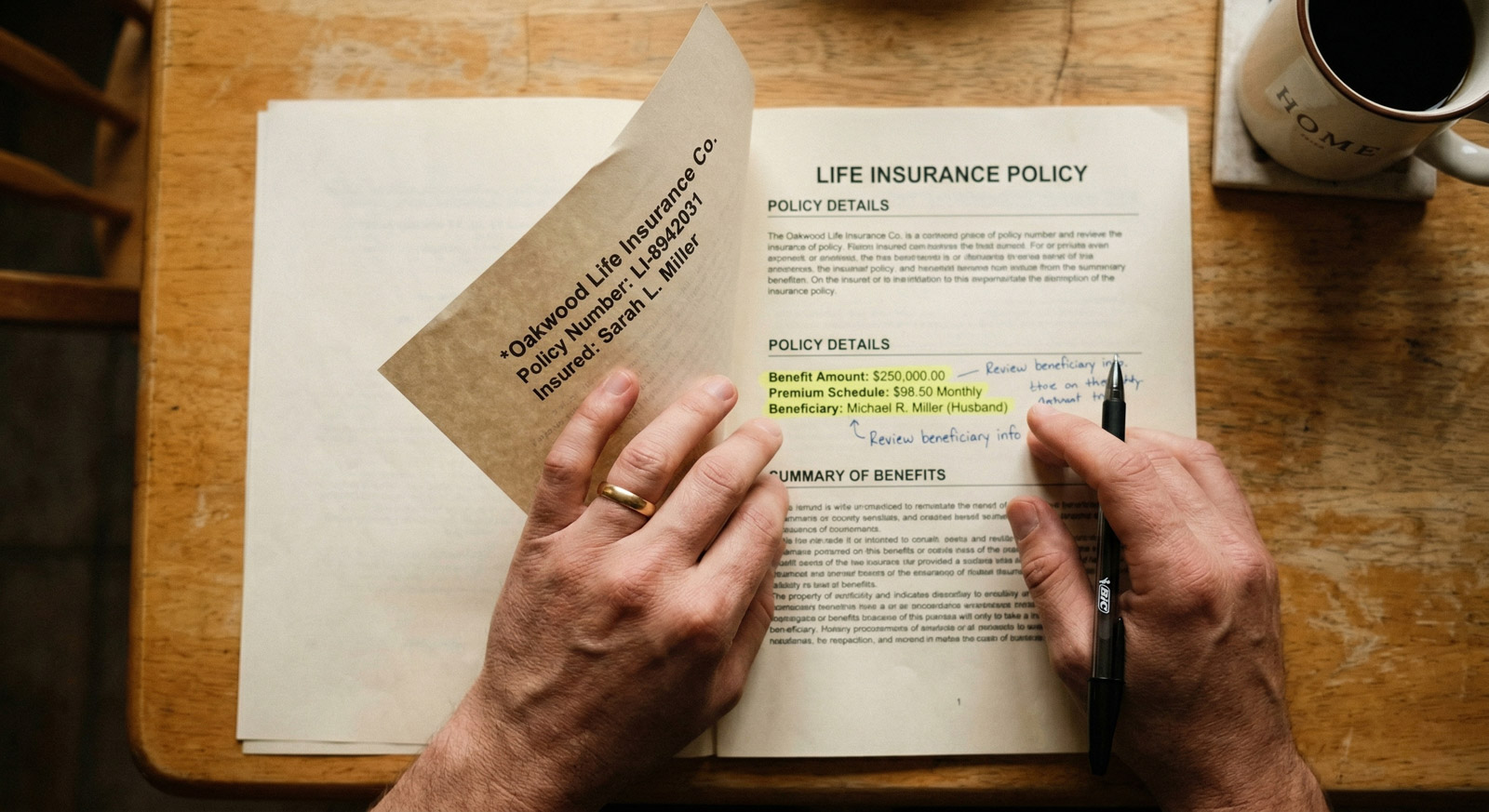
Most people need a will. Some people also need a trust. Very few people need a trust instead of a will. A will tells a court who gets your assets and who raises your kids — it's the only standard estate document that names a guardian for minor children. A trust avoids probate and controls how assets are distributed over time, but it only governs assets you've actually transferred into it. According to the American Bar Association, probate typically costs between 3% and 7% of the estate's gross value, so a trust makes sense when the cost of probate exceeds the cost of setting one up.
The will-vs.-trust debate is a lot less dramatic than the estate-planning industry makes it sound. Trusts are genuinely useful tools — but they're not the right tool for everyone.
Let's walk through how to figure out which camp you fall into.
What a Will Actually Does
A will is a legal document that tells a court three things: who gets your stuff, who's in charge of distributing it (your executor), and -- if you have minor children -- who should raise them if you can't.
That last part is critical. A will is the only standard estate-planning document that lets you name a legal guardian for your kids.[1] No trust can do that. If you have children under 18, you need a will regardless of what else you set up.
When you die with a valid will, your estate goes through probate -- a court-supervised process where a judge validates the will, your executor pays any debts, and then distributes assets to the people you named. In most states, this takes somewhere between six months and a year for a straightforward estate.[2]
What a Trust Actually Does
A trust is a legal arrangement where you (the "grantor") transfer ownership of your assets to the trust, which is managed by a "trustee" -- often you, while you're alive -- for the benefit of your "beneficiaries."
The most common type for estate planning is a revocable living trust. "Revocable" means you can change it or dissolve it whenever you want. "Living" means you set it up while you're alive, as opposed to a testamentary trust created by your will after death.
The key difference: assets inside a trust don't go through probate when you die. The successor trustee you named simply follows your instructions and distributes (or manages) the assets according to the trust document. No court involvement, no public record, no waiting.
That sounds great on paper. But it comes with trade-offs we'll get to in a moment.
The Probate Question
The number-one reason people consider a trust is to avoid probate. So let's talk about what probate actually costs.
According to the American Bar Association, probate typically takes around 16 months and costs between 3% and 7% of the estate's gross value.[1] But those numbers vary enormously by state. California uses a statutory fee schedule based on the gross value of the estate (before debts), which can mean fees of $13,000 or more on a $500,000 estate. Texas, on the other hand, has a streamlined probate process where the same estate might cost $5,000 to settle.[3]
Some states also offer simplified probate for smaller estates. In many jurisdictions, estates under a certain threshold -- often $50,000 to $100,000 in non-real-estate assets -- can skip formal probate entirely through a small-estate affidavit.
**Try it yourself:** [Calculate your estate's intestacy distribution →](/tools/intestacy-calculator)
So the real question isn't "should I avoid probate?" It's "how expensive and time-consuming is probate where I live, and does that cost justify the upfront expense and ongoing maintenance of a trust?"
When a Will Is Enough
For a surprisingly large number of people, a will is the right primary document. You're likely in this group if:
- Your assets are relatively straightforward. A home, retirement accounts, bank accounts, maybe a brokerage account. Retirement accounts and life insurance pass by beneficiary designation anyway -- they skip probate regardless of whether you have a trust.
- You live in one state and own property in only that state. Multi-state property is one of the strongest arguments for a trust (more on that below).
- You're under 55-60 and in good health. As Nolo's estate-planning editors point out, there's often little reason for a healthy 45-year-old to pay for a trust to avoid probate costs that are decades away.[2] A will now, revisited periodically, is perfectly reasonable.
- Your state has a simple probate process. States like Texas, Wisconsin, and others have independent administration or simplified procedures that make probate relatively quick and inexpensive.
- You want to name a guardian for your children. You need a will for this no matter what. If guardianship is your primary concern, a will is not just sufficient -- it's essential.
“"A will and up-to-date beneficiary information will suffice for most estate plans." -- AARP, The Ultimate Guide to Estate Planning[4]”
When You Probably Need a Trust
There are several situations where a trust stops being a nice-to-have and starts being genuinely important:
You Own Property in Multiple States
If you own a home in New Jersey and a vacation cabin in Vermont, your family could face probate in both states when you die. That means two sets of court proceedings, two sets of attorney fees, and twice the hassle. Transferring those properties into a revocable living trust eliminates multi-state probate entirely. This is one of the clearest, most cost-effective use cases for a trust.
You Want to Control the Timing of Distributions
A will gives assets to your beneficiaries in a lump sum once probate closes. A trust lets you set conditions. You might specify that your children receive a third of their inheritance at 25, another third at 30, and the rest at 35. Or that funds can only be used for education and housing until a certain age. If you have concerns about a beneficiary's financial maturity, a trust gives you tools a will simply can't.
You Have Minor Children (and Assets to Protect for Them)
While you need a will to name a guardian, a trust is the better vehicle for managing the money you leave behind for your kids. Without a trust, the court appoints a custodian for any assets left to a minor, and the child typically gets unrestricted access at 18 -- which is younger than most parents would prefer. A trust lets you name a trustee you choose and set the terms you want.
Privacy Matters to You
Wills become public record once they enter probate. Anyone can look up what you owned and who received it. Trusts, by contrast, are private documents. If keeping your financial details out of public view matters to you, that's a meaningful advantage.
You Want to Plan for Incapacity
A revocable trust includes provisions for what happens if you become incapacitated but are still alive. Your successor trustee can step in and manage trust assets without going to court for a conservatorship. A will, by definition, only takes effect after you die. (A durable power of attorney handles some of this, but a trust provides a more comprehensive framework for managing ongoing financial affairs.)
Revocable vs. Irrevocable: A Quick Framework
Most people discussing "trusts" in the estate-planning context mean revocable trusts. But there's also the irrevocable trust, and the difference matters.
| Revocable Trust | Irrevocable Trust | |
|---|---|---|
| Can you change it? | Yes, anytime | No (with very limited exceptions) |
| Who controls the assets? | You, as trustee | The trustee (usually not you) |
| Estate tax benefit? | None -- assets still count as "yours" for tax purposes | Yes -- assets are removed from your taxable estate[5] |
| Asset protection? | Minimal -- creditors can still reach trust assets | Stronger -- assets generally shielded from creditors |
| Complexity and cost | Moderate | High |
A revocable trust is a convenience and control tool. An irrevocable trust is a tax and asset-protection tool. Most families with estates under the federal estate-tax exemption ($15 million per individual in 2026, per the IRS) don't need an irrevocable trust for tax purposes. If your estate is large enough to potentially trigger estate taxes, or if you have specific asset-protection concerns, an irrevocable trust is worth discussing with an estate attorney.[5]
The Biggest Misconception: It's Not Either/Or
Here's something the will-vs.-trust framing gets wrong: you almost always need a will even if you have a trust.
A trust only governs assets that have been transferred into it. If you forget to retitle your car, or you receive an inheritance right before you die, or you open a new bank account and never link it to the trust, those "orphaned" assets still need to go somewhere. That's where a pour-over will comes in -- it catches anything that wasn't in the trust and directs it there.[2]
Without a pour-over will, those stray assets pass through your state's intestacy laws, which may not match your wishes at all. A trust without a will is an incomplete plan.
A Decision Framework
Rather than asking "will or trust?", try asking these five questions:
- Do I own real estate in more than one state? If yes, a trust likely saves you money and complexity.
- Do I want to control when and how beneficiaries receive assets? If yes, you need a trust for that level of control.
- Is probate in my state expensive or slow? If yes, the avoidance benefit of a trust may justify the cost. If no, a will might be all you need.
- Do I have minor children? You need a will for guardianship. You may also want a trust for managing assets left to them.
- Is my estate large enough to trigger estate taxes? If you're approaching the federal exemption threshold, talk to an estate attorney about irrevocable strategies.
If you answered "no" to all five, a well-drafted will with up-to-date beneficiary designations is a solid, complete plan. If you answered "yes" to one or more, a trust is worth the investment -- but you'll still want a will alongside it.
What About Cost?
A simple will can cost anywhere from $0 (using an online tool) to $500-$1,000 with an attorney. A revocable living trust typically runs $1,500-$3,000 for an individual and $2,000-$5,000 for a couple when prepared by an attorney, though costs vary significantly by region.[6]
But the sticker price isn't the full story. A trust also requires funding -- the process of retitling your assets (real estate deeds, bank accounts, brokerage accounts) into the trust's name. If you set up a trust and never fund it, it's essentially an expensive empty container. Some attorneys help with funding; others leave it to you. Ask up front.
A platform like Heirloom can help you get the foundational pieces in place -- like a will and the supporting documents that every plan needs -- without spending thousands before you've figured out your full picture.
What You Can Do This Week
You don't need to decide between a will and a trust right now. But you can take concrete steps that move you forward no matter which direction you end up going:
Take a 15-minute asset inventory. List your major assets -- home, retirement accounts, bank accounts, insurance policies -- and note which ones already have beneficiary designations. This is the raw material for any estate plan.
Check your beneficiary designations. Retirement accounts, life insurance, and payable-on-death bank accounts all pass outside of probate by default. Make sure they name the right people. Outdated designations override whatever your will says.
Look up your state's probate process. Search "[your state] probate court" and spend ten minutes understanding the timeline and costs. This single data point will tell you a lot about whether a trust is worth the investment for you.
Draft a basic will. Even if you decide you need a trust later, starting with a will gets the most urgent pieces in place: naming a guardian for your kids, choosing an executor, and making your intentions clear.
Write down your "what ifs." Do you want your kids to receive everything at 18, or would you rather stagger it? Do you care about privacy? Are you likely to own property in another state? Your answers to these questions will tell you whether a trust belongs in your plan.
The best estate plan isn't the most sophisticated one. It's the one that actually exists.
Sources:
- American Bar Association, Estate Planning Information & FAQs
- Nolo, Living Trust vs. Will
- World Population Review, Probate Costs by State
- AARP, The Ultimate Guide to Estate Planning
- IRS, Abusive Trust Tax Evasion Schemes -- Questions and Answers
- Nolo, Why You Might Not Need a Living Trust